
Aligning Organizational Values: West Point and the FBI
By James A. Gagliano, Wednesday, August 02, 2017
I arrived at the United States Military Academy on Reception Day (R-Day), July 1, 1983 and embarked upon what would become a 33-year career as a public servant. Having long been seduced by the Academy’s prestige and position in the annals of our nation’s history as a youngster, when my father was on the faculty at West Point during the late 1960’s, and I was afforded the unique experience of having cadets read me bedtime stories in my home. Growing up in Decatur, Georgia, I still recall my trips to the guidance counselor’s office and passing the iconic West Point recruiting poster with famous graduates like Grant, Lee, Pershing, Eisenhower, MacArthur, and Patton depicted in art atop this memorable line: “Much of the history we teach was made by those we taught.”
So it was no surprise to my parents --- or anyone else within earshot --- that West Point was where I would end up that hot July day in 1983, when 1,434 of us were sworn in as new cadets.
Graduating in May of 1987, I served 4 years in the U.S. Army as an Airborne-Ranger Infantry officer, and then in 1991, I made the decision to enter the Federal Bureau of Investigation (FBI). I served for 25 years in the FBI, retiring in December of 2015. My career spanned one-half of my lifetime, and I was privileged to serve in a host of leadership positions related to criminal investigations, SWAT, the FBI’s elite Hostage Rescue Team (HRT), crisis response, liaison to military units in Afghanistan, and as a legal attaché (diplomat) in Mexico City.
What 33 years of experience in the U.S. military and the world’s premier law enforcement agency --- the FBI --- taught me was this: The criticality of an organization’s employees being aligned with its core values. Core values are an organization’s “belief system.” They serve as a manifesto, of sorts, or can be described as an organizational conscience, the moral compass that serves to guide decisions and actions. Without them, you are navigating dangerous seas in a rudderless ship.
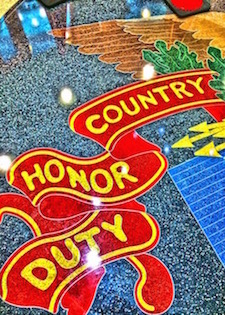
West Point was founded in 1802. It’s iconic and enduring motto --- Duty, Honor, Country --- has shaped generations of cadets and laid the foundation for graduates to become Army officers for more than two centuries --- leaders of character. Adherence to the motto requires an unwavering commitment to those implacable ideals. You simply cannot nuance them or negotiate your way around them. They are the bedrock foundation of the tradition that is unequivocal allegiance to always doing what is right. They are what you do, why you do it, and they supply the immutable guidance on just how you should do it.
The FBI adheres to three sacrosanct organizational values, as well. They almost mirror West Point’s in word and concept: Fidelity, Bravery, Integrity. They act as the three legs of support for the stool seat that is your corporation’s mission. Of course, just as West Point’s most important foundational piece is Honor, the FBI’s most cherished and important value is Integrity. Without it, the American public could not trust its Special Agents. That adherence to honesty and integrity is why federal prosecutions have such an impossibly high conviction rate. Juries tend to take an FBI Agent’s word as unimpeachable FACT in the evidence presented.
It is also important to note that the word Duty in West Point’s motto and the word Bravery in the FBI’s translates to always doing what’s right, no matter whether anyone is watching or not. It means standing up for principles and sometimes navigating past --- or through --- convention and tradition. Maligned as he has been in recent historical reviews, J. Edgar Hoover exemplified the organizational value of courage when he saw the utility and fairness in allowing African-American men to be part of the Special Agent ranks during the 1920’s --- the first, James Wormley Jones, took his oath of fealty to the Constitution in 1919. This was almost three decades before President Truman integrated the Armed Forces and a staggering 45 years before America ended segregation with the Civil Rights Act of 1964.
Hoover, despite popular myth that he was resistant to the Movement, provided the necessary investigative resources to gather evidence in the cases involving the violence towards and intimidation of Civil Rights workers during the tumultuous 1950’s and 1960’s --- a sterling example of doing the right thing, no matter how unpopular it may have been at the time.
CEOs often have huge spans of control. It is impossible for them to oversee every minute detail of an organization. By instilling an organization’s values within mid-level managers and frontline supervisors and allowing those core values to permeate the ranks in a cascading and descending flow makes for a stronger organization that relies on trust versus micro-management. This is essential in producing more leaders from within an organization and not simply managing a cadre of perpetual followers. It fosters buy-in and reinforces our natural human instinct to continually desire to become part of something bigger than ourselves.
Army officers and FBI Agents are expected to work autonomously --- often with little oversight in remote postings --- as they steadfastly comply with organizational standards and guidelines. For the military officer, that means hewing to the Universal Code of Military Justice and comporting oneself in a manner befitting a commissioned officer. For the FBI Agent, it translates to conducting investigations that not only follow the law but operate within the spirit of the law. It also means stringently remaining within the boundaries of the Attorney General Guidelines. FBI Agents follow the evidence wherever it may lead and investigate possible violations of law impartially, bereft of fear or favor. The FBI is an apolitical organization, and we never pick sides.
The members of your organization should be expected to do the same --- do the right thing in all instances. They also need to know that the organization’s values are clearly defined and in perfect alignment with its stated mission. And they need to know that what a leader expects of a direct report, he/she also demands of themselves. In the immortal words of General Douglas MacArthur in his famous speech to the corps of cadets on his final visit to West Point in 1962:
“Duty. Honor. Country. Those three hallowed words reverently dictate what you ought to be, what you can be, what you will be…”
James Gagliano
 Expertise: Practical, crisis (in extremis) leadership; leader development, effective leader communication, leading through change, improving operational effectiveness ExperienceJimmy has some three decades’ worth of practical leadership experience, both in traditional military units as an Airborne-Ranger Infantry Officer and federal law enforcement executive-level assignments. He spent 25 years as an investigator, SWAT... Read More +