

Decision Making in Chaos…Bring it on!
By Major General (Retired) Spider Marks , Sunday, January 01, 2017
How do you define chaos? How do you recognize when you’re in the middle of it? More significantly, as a leader, what do you do about it? How do you continue to move your organization forward and drive to the outcome that you want?
Although you may have a definition of chaos and can visualize what chaos looks like, no two chaotic circumstances are the same. Chaos follows bad news as well as good and usually involves some form of randomness…people running around directionless or simply frozen in place. For example, the award of a contract requires delivery for which you may not be fully prepared (people running around) not unlike the loss of a contract that requires a contraction (people frozen in place), waiting for the next shoe to drop.
The trouble, however, is you may not see chaos coming. In today’s environment of “big data,” the root causes of chaos can hide in plain sight. They lack a discernible pattern. As your corporate world collides with your private, as you seamlessly blend your digital data inputs (mobile devices are everywhere), chaos can seem the norm.
One thing is certain; chaos results in change.
So within this environment that increasingly is more chaotic, more random, often inexplicable, you exist; you thrive; you make decisions. For example, you can’t understand the initial public offerings like Facebook (chaos…price was too high; stock tumbled by 50% and settled). Mergers scare you, because jobs and “your luggage” get lost in the reorganization (chaos…lower your expectations of linking up with your luggage at your destination once American and US Air combine). New technology rollouts don’t meet market hype (chaos…the map app on your iPhone had you navigating across a lake and Apple leadership navigating market criticism).
That’s chaos. It’s not crazy. It’s the environment we live in.
Decisions must be made under pressure, truncated timelines, high emotions, higher expectations, and lower margins. Can you remove yourself from your environment? No, nor should you. However, if want to make decisions that are more antiseptic and less boiling over with emotion, here’s how.
Know your team.
Every leader has a kitchen cabinet, a coterie of advisors with whom you have a special and trusting relationship. Shine the light on them. Praise them in public, and they’ll speak honestly with you in private. Bosses don’t empower their subordinates; subordinates empower themselves. These folks will empower themselves and demonstrate routinely why they are your most trusted and able teammates. Napoleon had “directed telescopes,” trusted aides who went forward in combat (chaos) to assess his Army and the enemy. Find your directed telescopes and honor them.
Delegate down.
At the very moment a crisis hits, let go. Following a thoughtful process, you must delegate clear authorities to your subordinate leaders so they can act without hesitation. This does not suggest taking your hands off the controls. It does mean that those around you must know that they are authorized by you personally to act. Empowerment of the team in uncertainty is a must. Too many unknowns, too many decisions. Let your horses run.
Control up.
In chaos, keep your boss informed. It’s non-negotiable and is ignored at your own peril. It’s also fairly tough to do, because you don’t want to bring your boss bad news. However, assume your boss wants to be helpful in chaos, so give him or her a chance to be part of the solution. Minimally, your boss will acquiesce to your decisions or, not surprisingly, you may get some great ideas! Universally, higher headquarters are information sinkholes, but embrace it. You’re expected to own the outcome as you emerge from chaos; own the message as you work your way through it.
As an intelligence officer in combat, I had to control the message, the assessment of the enemy’s capabilities and intentions, that my commander (my boss) received. My technique was to brief my boss personally, in private sessions with key advisors, multiple times during the day. I chose not to delegate the messaging my boss received. The significance of that assessment could not have been more consequential. Soldier’s lives were at risk. Lives may not be in the balance in the chaos you experience in business, but keeping your boss informed is no less important. Control the message.
Show up.
Very simply, be visible. In chaos, your people want to see you. From you, they expect calm, to get solid guidance, and to know you care. You must never under value the healing effect of the leader “in the trenches” with a team that’s “under fire.” In the military, it’s known as the “point of decision.” Good decisions come from good leaders who have a good view of the environment and that means being where the action is. Usually that’s up front. Know where your “front” is and get there before everyone else, intellectually and physically.
Prioritize.
First things first. In chaos, prioritization is critical. There’s already enough energy, so do everything in your power to focus it. When I was the senior intelligence officer for the invasion of Iraq, the missions were limitless: What is the status of Iraqi chemical forces? Where is Saddam’s senior command and control headquarters? Where is Saddam himself, his Top 55? Will Iraqi citizens accept coalition forces? The intelligence requests came from every unit in our command and many outside our command. I established a priority task list to answer these requests based on a single criterion…to keep “first things first.” My priority task was to provide the Marine forces detailed intelligence of the southern Iraqi oil fields, the first objective of our invasion. If we did not get that right, there was little chance of overall mission success. The Marines’ mission was to secure the oil fields and ensure Saddam could not destroy them as he did in Kuwait a decade earlier. Seems like an easy decision but the intellectual competition pulling us in other directions was crushing. We understood our priority, remained focused, and stayed deaf to criticism.
Recognizing chaos is less important than recognizing that within chaos good decision making is essential. Too much is at risk especially when emotions on your team are raw. Remember, your boss and the market have votes in the outcome of your efforts.
While competitors pray for your demise and some on your own team may anticipate it, quiet your critics. Be calm, be focused, be prepared. Chaos? Bring it on.
Major General Spider Marks
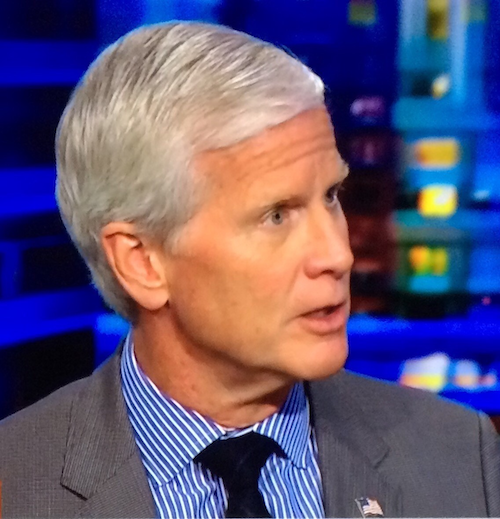 ExpertiseChief Executive, leadership, organizational vision and design, media consultant and communications, public speaking, board director and advisor ExperienceGeneral Marks has over 42 years of leadership experience in both the Army and industry. He commanded Soldiers at every level from 2d Lieutenant to Major General. He served as both an infantryman... Read More +